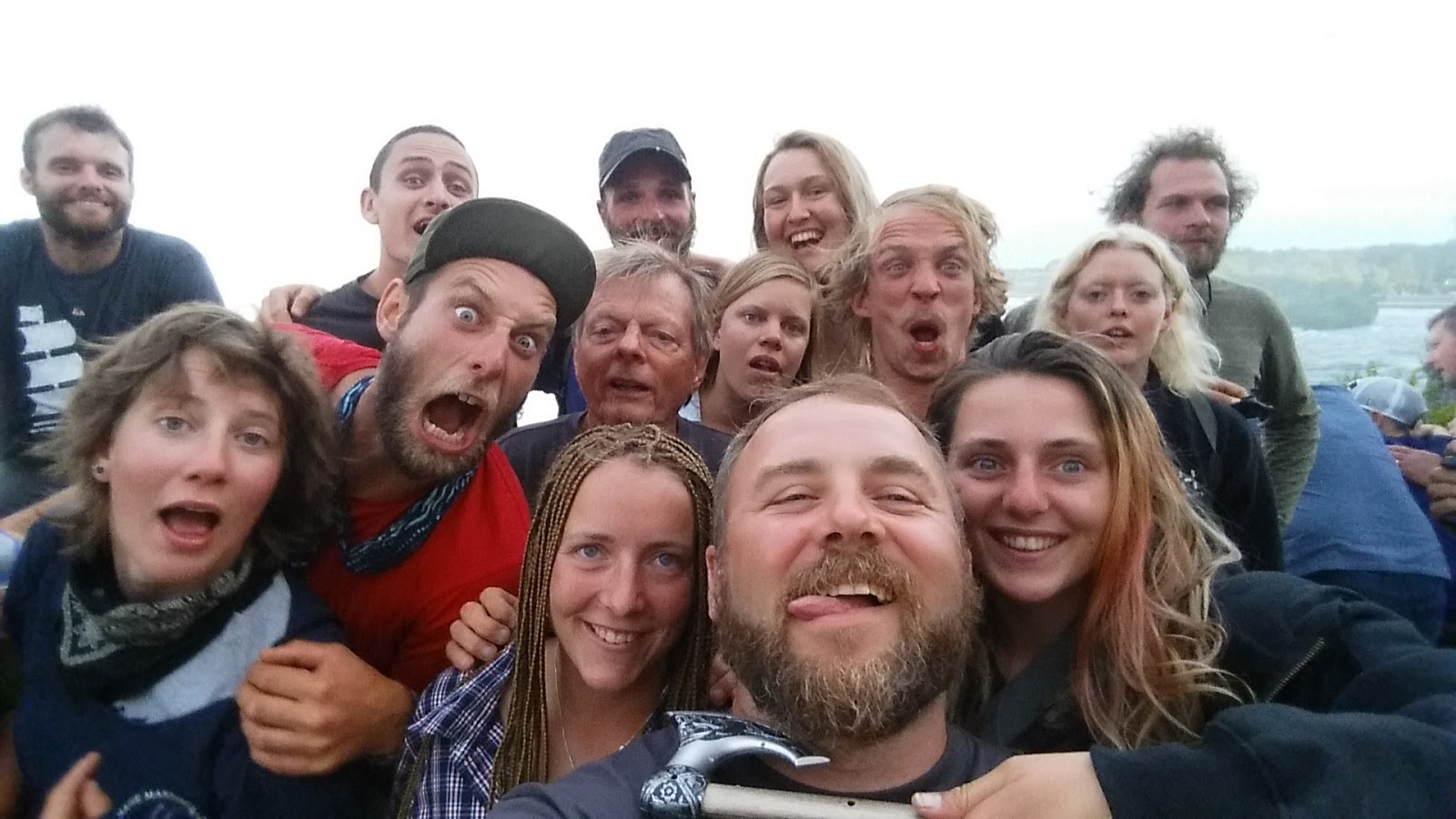
So in my continuous search for sustainable work in the field of life I love, I took a contract working on the Draken Harald Harfagre. Don't get me wrong, I have an amazing, well paying career as a Plant Superintendent which affords me a very comfortable life. But a realization that we are conditioned at an early age to work for the machine and always look to the future to follow our dreams... Where do you think Bull Shit expressions like, "waiting for your ship to come in" or "good things come to those who wait." come from?!
That second one is the worst expression and a prime example of the conditioning we are taught.
Why do we set a goal and then take the long way around? So many have jobs or careers to cover their bills but hate their job? Just so that one day we can maybe realize a dream one day? Wait till we're retired to start? Why not make daily decisions with your dream as your goal?
A few years I made this mind change. When I was out shopping, see a great big TV.. Man that would be nice, but can I fit that in my sailboat? No? Move on.. Keep doing that and that long twisted turning path to your dream starts straightening out. Now I live at least 6 months a year in the sun, surrounded by palm trees. Its a good life. Last piece of the puzzle was to utilize my skills as an engineer to take contracts for the summers so I can adventure all winter.
In came Draken.. She is a tough ship to work on. I was hired on as the Chief Engineer in 2016 and enjoyed a great season in 2018 as well. The 2018 season saw us sailing the East Coast of the USA from Mystic Seaport to Norfolk Virginia and back.. Check it out HERE
What an experience this ship is.. It is famous with thousands of people in each port yelling and clapping as we come into port.. What a surreal feeling.. Never been asked for autographs before until this ship. I love the energy.. I love the people..
The crew is largely made up of volunteers with a core crew of between 7 and 10.. The other 20ish crew is volunteers from all different walks of life. This makes life a little tough in a few ways... The rig is a traditional square rig weighing over 3000lbs. and the largest rig like it in the world. The training as crew come and go for their 2 or 4 week legs means constant training.
But also, the hardest part is the relationships we make.. We make connections and then before we know it, a new group of volunteers shuffle through all wild eyed and excited. The energy is amazing.. But that is a sailor's life right? Always saying, "see you later."
This ship is built like no other.. As the chief Engineer, I am in charge of all the more, non-traditional parts of the ship.. Means at times 12-14 hour days.. But I love it and I will continue on with it.
With Draken Harald Harfagre, we have some huge plans for the near future
Distance from home, from friends, family and work. Sometimes the distance is good, sometimes it's bad..
I will never regret my choice to travel.
I know some may consider this choice to be non sustainable but neither is working everyday, day in, day out. Working OT to puff up that paycheck. Tonight, the distance seperated me from hearing of the death of a man I considered a friend. He died a month ago.. A tough prick that when we first met, wouldn't even talk to me. I was too new at the plant to be trained by him... But I wore him down. Shift after shift I worked at him like I do and we became friends. We joked during long and exhausting graveyards and bitched about plant issues together... Looking back, it was just to pass the time.. He worked everyday.. seriously every fucking day.. THAT is not sustainable.. His heart gave out. His wife and kids will miss him.
Tell you what is sustainable... Being free. Free to drop hook in paradise after paradise. Free to slip over the gunwale to spear my dinner. Free to meet new people and love them.. Free to say goodbye to them too. Free to camp under the stars with amazing friends. Free to open my heart up in the middle of the night knowing it is for not. To rub a friend's back and feel myself fall and then pull myself back. To worry about my people and spend all my energy on them. Free to end that too. Free to wander down a foreign street during carnival with my headphones on in obscurity. To not give up. To wait, to love, to let my walls down.
My point is, beyond the obvious, so many can not see the full picture. Most people see in 2 dimension. They see what society has made them.. Drones set to work, pay bills, live in their little box.
The world is not 2 dimensional, nor is it 3 dimensional. It is so much more than that.
This life gives freely if you are just not afraid to reach for it.. This last year I almost died in South America by a kid with a machete over a backpack. Made me realize my life needed to change.. So I made the change.
I have fed wild monkeys bananas and coaxed their babies to trust humans.
I sailed an amazing viking ship with an amazing crew. Slept beside them, sweat with them, sang and danced with them.. Made lifelong friends.. I was terrified when I quit my job to set sail.. Like the saying goes, I threw off the lines. Stepped off into the world with no solid plan, just an unmanifested dream and a 27ft sailboat.
I will never regret my choice to travel.
Whether it is the rush of surfing down waves under full sail or waking up to the gentle lap of the water on the hull. Or seeing the look of happiness on a friend's face before we get hurled through the air on a Mexican carnival ride. Or watching my mates look for lobsters under rocks and then buying them for dinner.. None of this would have happened.. My life wouldn't have been made richer by all these experiences if I had stayed cradled in that rut. I'd have never met so many of my people.. I live a blessed life. I am richer for it..
Now that I am tied comfortably in a marina in the Cortez, I am hoping to be able to catch up on some blogging and put more out there for the VLOG.
The original intent with the VLOG was to keep the friends and family engaged with the voyage. A video stimulates so much more than words and pictures. Here is a list of the videos in the VLOG so far. If you have time, enjoy them! ☺😎
Flat calm. An ever so subtle transfer of energy from the ocean to the hull brings me back from my thoughts as I lay on my foredeck. The lights of the small village I float nearby all go dark as if by que as the generators shut down for the night. The stars already bright suddenly glow brighter as slowly my eyes adjust and I slip back into my thoughts. Slight blues and red flash as some stars reveal they are not all white. Maybe they didn't just reveal this, maybe I just started to pay attention. Or maybe the absence of all man made distraction helped me to see. Or maybe the barely perseptable movement of the Golden Hind on which I float, tethered to Terra by a mere hook and rode shifted my thoughts to notice.
Dawn will again come, all this will be masked by a deep blue, pinks, reds and finally day will break.. Again so many stars disappear from sight. That's ok because the warmth of first light will touch my skin and distraction from these thoughts are replaced with another beautiful gift. Life, a life spent living it my way. For now, I will sacrifice a world I was conditioned to need to live a life with time. A currency so easily spent by far too many, far to easily. A currency which seems to be endless until it is too late. A currency we all have but valued differently by everyone.
I am lucky, not because I am laying on the foredeck on a warm December night floating 35 feet above the ground on crystal clear water. That was a series of hard choices made and dedication. No, I am lucky because of the country embossed on my passport. The choice by those who rule afforded me the chance to choose. Not all have this.
I watched two young boys today, maybe 8 and 10 run out of their fibreboard shack with kitchen pots obviously sent by their mother to fetch water halfway across town. This sight touched me a bit because I know this is their life. Their little chore and their little dedication to their family. They will have very little chance for escape for better things. Maybe one of those little boys will be a shimmering blue or red light unlike the miriad of simple white spots. Different from the mould. I hope they see it.
And yet here I am, anchored 600 feet from their doorstep by choice. I fetched water from the same sistern yesterday.
If the chance is given or a choice is an option, choose to take back the time. Don't spend it on money. Money can not buy you time. Take the conditioned barriers that are built around you since before birth and push them aside. Take back your time and pursue your life. This is not a rehearsal and no divine master is going to beam you up when your currency is all spent. Take it and choose how to spend it. Chase a dream, be brave and gybe for the first time. Resetting your sails takes effort and energy to catch the wind in a new direction. The wind is there and the choice is yours which direction you choose, it is not dictated.
All that is needed is a moment without distraction to see the difference between so many choices that all look the same. It is easy to miss the subtleties that make one choice shine a little differently. Not all the same are the paths chosen.
Right now is the time. Do not wait for tomorrow when today shines so brightly.
Today I learned why you should always carry a knife when cruising in Mexico.
I am a very cautious man. When it comes to sailing and sailing offshore I typically double think things and ensure I as well as my boat is prepared for the next journey. I like to research unfamiliar topics and glean advise from other possibly more experienced individuals to ensure I am as prepared as possible.. I rarely shrink back from a challenge and typically try to over achieve. . This has been both a help and a hindrance in my life.
Before I set off from the safety of my familiar waters, I heard much talk of piracy and banditos on the Baja as well as elsewhere in Mexico.
Today I was lucky to have been carrying my dive knife in my backpack. I wasn't packing it out of fear of being mugged.. No, I only had it on my person because I had just came from a day of free diving and spearing fish for tonight's dinner in the crystal blue waters off an offshore reef..
After catching enough food for 3 nights supply for Duke and I, I kicked off my flippers, pulled anchor and powered my dinghy back to the sheltered Cove where my sailboat floated lazily on her hook. The Sun was hot today, and the warm air crystallized the salt on my skin as the chill from evaporation was replaced by the sun's heat aided by the dry air and the spead across the calm water. I have taken to searching for reefs further from shore, pinnacles where the larger fish roam. This time just around the corner to my starboard is Santa Maria and the small shark fishermen camp where Hammerhead, Maco are the main prey. Those big boys are further out. To my port is a small fishing village of Belcher Bay where they toss the byproducts into the water which according to the locals brings in Tiburon in the 5 ft range for a free dinner. . Armed with my knife strapped to my leg, a homemade hawaiian sling and a lung full of air, I haven't had to buy meet in weeks.
As I journeyed down the coast, I waited for the water to finally warm and clear enough to hunt. This would also mean entering another country where things are done differently from my home in Canada. On the southern trek I passed through areas of extreme oppulance and shady neighborhoods where walking to get supplies, poor women offer favors literally for alcohol. In these places, I didn't feel in danger or nervous but I felt sick because of how society needs the extremes to push people to the top. The first rule of physics applies here as well. I was warned fervently about the corruptness of the people just a few lines of latitude south. Undaunted, I set the sails and caught a favorable breeze south in the early evening for the overnight passage to clear in.
What I have been met with since entering Mexico has been extremely friendly and helpful people. There is the typical larceny on the beach by young men wanting money to "watch my dinghy" much like Brazil where this is done in almost every parking lot or street. I was used to it and somewhat expected it. But that has only occurred in Bahia Tortugas where the Baja Ha Ha and FUBAR have inadvertently taught the locals that they can expect money from sailors. This has been isolated to this one location so far but hey man, these locals ended up being very helpful and giving, inviting us to party with them into the late of night. And that young man did "watch the dinghies" as the rising tide almost washed away a few if it wasn't for him keeping watch and running out there to drag them higher up the beach. Well worth the 25 pesos.
This brings me to my bay. I have spent over a week exploring the huge bay solo as one group of boats headed south and I waited for the rest of the group to catch up. Affording me time to really get to know the people. I roam the sand roads, waved at by the chubby men and weathered women. Invited to sit in the shade and engage in a match of 'decipher this sentence'. I enjoy the interaction. My Spanish is increasing exponentially as they laugh at my pronunciation.
Lupas, Moy amigo. He has found me gasolina when I was almost out, bargained with the water man to get me drinking water straight from the Desaladora Planta cistern. Gave me two massive lobster simply because I help him with his English. These are the people of the Baja. These are people with very little. Little boys with slicked over parted black hair running down the beach to help me get my dinghy in the Agua. Beeping their horns and waving as they pull their pangas down the beach road. They know of me as I live just out of reach in my floating home.
Any good sailor is self sufficient. Able to find or fix their way out of any situation.
Arriving back at the Golden Hind IV, I lifted the bucket of fish over the gunwale and spun the inflatable around for shore. Duke has been on the water for a few hours and needs to take a break. After landing on the remote beach and the wind picking up, I laced my arms and slid the backpack on for a quick hike. All is great except for the wind steadily building.. There is a change in the weather coming. A front is clearly visable as the stacked clouds line across the sky. Shirtless and in shorts, I pull the dinghy across the crushed shell beach and back into the water as duke jumps onto the bow as he has been trained to do. Firing up the engine, and gunning it to push upwind to the boat, I quickly sucked up a scrap of fishing net into the prop. Unable to free it by hand and being blown further down the bay, I remembered the dive knife. I was lucky as this was the first time I packed a knife. Now my multi tool is always on my belt. Saved me a long long paddle back home.
I know that as this adventure continues, I will pass through areas not near as trusting and safe. But for now, I can tell you that the people of the Baja in these small, dry fishing villages are gems. They are rough around the edges but their souls are good and I have been lucky enough to be embraced by them.
With each mark of latitude and every mile ticking by on the plotter my spirits rise. The water has gone from a dark greenish black through many hues of dark blue to a light crystal blue. Sitting snug in the San Quintin channel listening to the gurgling of the 4 knt current on the hull, I have time to reflect on my 1800 NM. journey to get here.
I remember the first few days, leaving the security of my slip in Ladysmith,BC and winding my way through the Gulf Islands and San Juans. Every island held memories of nights spent under the stars dreaming of the day I would set out. So many memories of days running spinnaker up the channels and daydreaming of greater adventures. I wondered when I might see these places I have grown to love again.
Another line of latitude finds me off the coast of Washington. This coast is not to be taken lightly. Wild and cold the nights of solo sailing are lonely.
A few more ticks of latitude and I cross the Oregon line. Water is like crystal. Blue and Cold. The freak wind storms that can develop along this desolate coast will close all the bars making it impossible to find shelter. I remember the time spent weather routing to ensure the next port would be made before the next weather system rolled in. The big seas have long since become normal. The Golden Hind IV takes it all in stride and pushes forward . She is an amazing boat.
Watching the miles go under the keel and the water lightening to a clear blue, my spirits rise as finally California passes by my port side. Being caught in an unforcasted wind storm, I surfed into Crescent city in high seas and on the verge of dangerous conditions.. Surfing the angry steep seas, the peaceful blue turned to black as the wind whipped the tops of the waves. The exhausting run finally saw me making the placid Cove of Crescent city at 2:30AM. A light fog on the flat water lit up by the Sodium Vapour made me reflect on what just happened and how glad I was to be safe at harbor.
At 40° latitude. , I rounded the infamous Cape Mendocino. This Cape is a turning point and any cruiser that has rounded this Cape know that it is a big thing. We set out as a group under calm conditions and rounded in the dead of night. Flat calm. Next stop, Sausalito in San Francisco Bay where a 3 day turn around to reprovision turned into 2 weeks as a storm system slammed into the coast.
Miles under the keel, blue water passing under keep this journey real. Dolphins playing in the bow wave like torpedoes trailing phosphorescence in the night. Always a welcome sight and a chance to lay on the bow trailing my hand in the passing water watching the creatures dart back and forth in the black of night.
Lights of LA and new friends opening their arms to me in Cabrillo was a nice break from the open seas. A chance to get out on the town and down many beers in the local bars and boats. Good times and great new friends. Newport Beach is the meaning of American excess. Anchored right in the middle of glass castles and multimillion dollar yachts, I couldn't help but feel excited to get south and out of this atmosphere.
Finally the crossing where the starboard shroud gets a new flag.. The red white and green of Mexico replaced the stars and stripes.. At about 31°latitude, Ensenada. Clearing in was a snap. Although time consuming and about half a tree later, the very official personel made love to their rubber stamps and triple stamped everything. But what do I care, I'm in and nothing would be better than to celebrate with cheap beer and fish tacos with friends.
This brings me to where I lay now. Snug in the harbor of San Quintin. The blue water framed by sand dunes and dormant volcanoes all around the coastline make me realize how far from home I am.. And yet I think about what the future will bring.
So finally after 6 years of rebuilding the Golden Hind IV,
we are leaving the safety of port and sheltered waters of
Eastern Vancouver Island!
It has been a long road since I bought "Goldie" as one of my good friends has dubbed her. We have been through a lot of changes as she experienced all my love and attention bringing her back to cruising shape. She has been given a new lease on life and will soon be heading out to explore the wide open blue like the proud little ship she is.
The plan:
Quit the job. Check!!
Finish up all the last minute projects. In Progress!!
Provision the ship for an offshore run to San Fransisco, San Diego and Cabo San Lucas.
Spend the winter months exploring the Baja and Mainland Mexico.!
Decide in the spring if we head for the South Pacific or South into Central and South America,
So its time to pack the foul weather gear, life equipment and sunscreen. The Golden Hind IV is about to put some serious miles under the keel!
If you are interested in following her journey, please check out the link to YouTube here !
You can always follow the blog here by following on this page as well as G+ As always, leave a comment below and let me know you stopped by and where you are from! :)
As an Albin Vega enthusiast, and upcoming offshore singlehander of the Golden Hing IV, # 2179 Albin Vega, I will speak mainly of gear suited for these smaller vessels. Typically most Sailboats under 30 ft will require a similar vane.
Navik from Plastimo Altho out of production, perfect for a Vega
Given that short-handed sailing is the default situation for many boat owners, some kind of efficient self steering system is a huge benefit. Indeed, a decent self steering system can be as useful as two crewmembers – they don’t need to sleep, nor take meal breaks.
Windvane systems are rugged, dependable and won’t drain the batteries – all good reasons why they are the favoured self steering choice of long-term cruisers.
Before buying any type of self steering it’s important to analyse exactly what level of performance you need from the unit – this is a crucial first step in narrowing the many different options and levels of specification. Will the system be mostly to take over briefly while you’re doing other such as making a cup of tea, or to take the boredom out of motoring in a calm? Alternatively, is it to take over when the going gets tough and there are no volunteers to helm, or to steer the boat for long distances on extended passages?
If the answer to either of the first pair of questions is “yes”, an entry-level model may suffice. However, if the answer to either of the second pair of questions – indicating more serious use – is affirmative, this points strongly to a quality model – either windvane or electric – that will be capable of steering the boat for long periods of time in challenging conditions.
Windvane vs electric
There was a time at which any long-distance voyaging boat would sport a windvane self steering gear on the transom. They tend to be robust, often requiring servicing only after tens of thousands of miles, require no electrical input, and can often be easily fixed using locally sourced parts and labour even in remote parts of the world. These remain undeniable advantages in today's world, and many seasoned skippers swear by their wind vane gear for good reason.
On the downside, the upfront cost can be relatively expensive, and windvanes tend not to be effective sailing downwind in light airs, when the apparent wind is low, and are useless for motoring in a calm, when the apparent wind is always from ahead, irrespective of your course. For this reason many yachts with a robust windvane system will also carry an electric pilot, although this does not need to be of a high specification, as it will only be used in easy conditions.
If choosing an electric pilot for serious sailing, buy the very best you can afford.
The best electrical systems are now equally capable of steering a boat across an ocean, although carrying spares of key elements of the system is a sensible precaution. On the downside, they can also consume significant amounts of power, making it more of a challenge to keep batteries topped up on a long passage. This can be particularly true for lower specification units that struggle to keep the boat on course, thereby using more power than a system that will steer a better line. Quality electric systems also tend to be preferred by owners of modern lightweight yachts that are designed to sail downwind at planing speeds in strong winds.
Types of windvane
After first being developed in the post-war years by the likes of Bernard Moitessier, Blondie Haslar and others, windvane design now favours servo pendulum types, which magnify the power produced by the small vane on top of the unit.
A number of companies have with their own designs based on this theme, most of which work on similar principles but offer advantages in terms of size, price or track record. One that stands out from the rest is the Wind Pilot. As an Albin Vega Owner, The Wind Pilot Light is a great choice and in fact operated on countless Vegas as a replacement to the now out of production Navik system.
Here is a video of the new installation of the Pacific Light on the Golden Hind IV:
The Navik System has been considered for decades to be the answer to windvanes on the Vega. This Windvane has been said to be built as the perfect companion for the Vega. Unfortunately the Navik windvane was bought by plastimo and then put out of production.... Good news on the horizon though as a new windvane system has been developed very similar to the Navik which will be available to the sailing community in the next year or so!
Another windvane which is a fairly young design is the MeVee system. Here is a picture of the MrVee on the Golden Hind IV. This system would work well on some boats but not the Vega. In fact it never really worked right and subsequently has been removed for sale at the next marine swap meet! The main issue was the drive quadrant was way to small and its light construction. It just never worked right and the final straw was when the pendulum paddle slid right off the pendulum shaft in calm seas! What if this had happened offshore?
Beware, Cheaper is not better on a critical part of your sailboat's steering capabilities.
The simplest electric pilots are the basic all-in-one tiller pilots that just require a 12V power feed, and equivalent basic wheel pilots. If of an adequate size, these can work adequately on smallish boats.
However, the basic unit’s lack of a rate sensing or gyro compass mean that they are not able to respond as quickly and will struggle to keep a boat on course, especially in a quartering sea. In addition, the on deck units are vulnerable to failure as a result of water ingress.
A Bowden cable from a Canadian-manufactured Octopus drive passing through a waterproof gland allows a top specification below-decks pilot to be used on tiller steered boats.
If you’re undertaking serious sailing and opting for an electric pilot, the best you can afford becomes essential. This means a below-deck unit, with a gyro or rate-sensing compass and separate pilot computer. The compass is important here – a lesser model simply won’t provide data to the unit sufficiently quickly. This may well be fine in easy conditions, when the pilot is a useful convenience, but may not work in the kind of heavy weather in which a small crew is likely to depend on the pilot. A further step up will give you a system that also includes a heel angle sensor, which further improves the accuracy of steering.
The right size unit
Manufacturers of all types of self steering gear generally quote recommendations by boat size and length. However, it’s worth noting that many yachts, especially older craft, were built with thicker laminates than the designer originally specified and may well be significantly heavier than the figures quoted by the boat builder. In addition, even boats of a modest size tend to collect a significant weight of additional gear, supplies and crew weight that can easily add a further 20 per cent to the total weight of the boat that must be considered when the pilot is specified.
Balancing the rig
No pilot, whether a windvane for electric model, will work efficiently if the sail plan is not well balanced - paying careful attention to sail trim and shortening sail in good time as the wind increases is crucial to the ease of steering the boat and therefore the performance of all self-steering systems.
Electric pilots allow you to tweak the settings so that the unit will both maintain a reasonable course to windward and tack efficiently across a wide range of conditions and long-distance short-handed racers even talk of trimming their pilot settings in a similar manner to trimming sails in order to get as close to 100 per cent performance as possible. An electric pilot will be only as good as its inputs, so accurate calibration of the instrument system, including compass, masthead wind angle, and boatspeed is also important.
Sitting at the tiller is exhausting and something that you will find to be deeply regarded as the least favorite thing to do by long distance sailors. It requires constant attention, minor adjustments, and absolute focus. Without self-steering, the single-handed sailor gets no relief while under way -- and any relief that might come while hove-to is accompanied by the haunting knowledge that distance gained while sitting at the tiller is now being lost. Even with a crew, self-steering gives everyone more time to lay around together, talk without distraction, play chess, cook, etc.
The best self-steering solution is probably a windvane gear. They have to be custom made for most boats, though, so buying a commercial vane would cost almost as much as my entire boat did. Building a windvane yourself is possible, but that usually requires welding and access to a machine shop. The alternative self-steering systems can be just as reliable, and they also help to cultivate an enhanced understanding of sail trim, sail balance, and the forces that are at work as your boat moves through the water.
Once you finally get a self-steering system worked out, it's a great feeling to stand on the bow as the boat sails itself along.
Sail Balance
A critical self-steering concept is that your boat should be able to sail itself most of the time. The idea is that it's possible to balance the boat on a fixed heading using the sails alone, and that any extra self-steering equipment is only to correct for wind variation or wave motion. This makes it necessary to understand the basics of sail balance.
In the right diagram, as the wind hits the main sail, that pushes the aft of the boat to leeward and the bow rounds up into the wind.
The exact opposite happens when wind hits the forward sail, pushing the bow to leeward and rounding the boat off the wind. In reality the wind is hitting both sails at the same time, so if the sail sizes and trims are balanced correctly, only forward motion (with a negligible amount of side slippage) will result. If only one sail is up or one sail is much larger than the other, the results will be predictable.
While sailing on a close reach, sail balance is complicated by heeling. As the apparent wind increases, the boat will roll to leeward (moving the mast and sails off to leeward as well). This causes the mast of the boat to act like a lever arm that is no longer pushing directly forward, but rotating up into the wind. The boat will now have a tendency to round up, which must be corrected for by the tiller. This is what's known as weather helm, since the boat is constantly trying to go "to weather."
A little bit of weather helm can be alright, but too much will defeat any self-steering system and give you a really sore arm. Knowing what we know about sail balance, in these conditions it's possible to correct for weather helm by adjusting sail balance. We could, for instance, reduce the size of the main or increase the size of the jib. Like-wise, we could sheet out the main so that it catches less wind. Both would have the effect of using the sail balance to counter-act the forces of weather helm.
Sheets To Tiller
The basic premise of non-windvane self-steering systems is to balance the tiller using some feedback from the mainsheet or jibsheet. There are different ways to do this effectively, depending on the point of sail.
Close Hauled to Beam Reach
The basic idea is to start by balancing the boat. Then use the force of the main sheet to increase the pull of the tiller to weather during puffs, and reduce the pull of the tiller to weather during lulls. If the main sheet is connected to the end of the boom, this is done by attaching a control line to the main sheet, running it through a block on the weather-comb of the cockpit, and fastening it to the tiller. For an opposing force, connect lengths of elastic from the opposite side of the cockpit to the tiller.
It takes some experimenting to figure out how strong the elastic and weather helm control lines needs to be. The point where the elastic goes slack should be when the tiller is exactly center or slightly to leeward. This means that if you need more tension on the elastic, it is necessary to connect an additional piece, rather than pulling an existing piece tighter. Otherwise the elastic will not go slack until the tiller is well to leeward.
Broad Reaching
A close reach or close haul is a stable point of tack. As the boat falls off course on these tacks, the wind forces tend to automatically correct it. If the boat sails too far up, it will luff and fall off. If it sails too far off, the weather helm will increase and push it back up. Unlike a close reach or close haul, the broad reach is not a stable point of tack. If the boat starts to drift off course, the forces which initially moved it will only increase until the boat is changing direction faster and faster. This makes self steering systems even more important for a broad reach.
It turns out that a correctly trimmed jib sheet is incredibly sensitive to changes in direction on this tack. If the boat falls off the wind any, the jib is blanketed by the main and the jib sheet goes completely slack. If the boat heads up any, the jib is hit hard and the sheet becomes extremely taught. If your jib is small enough, you can hook it directly to the tiller as the weather helm control line, balanced by a large piece of elastic.
If the tension on your jib sheet is too much for a direct connection to your tiller (strong winds, large jib, etc) -- it is possible to build a lever which can measure the tension in your jib sheet instead.
Running Downwind
The best method for long runs straight down wind or slightly off the quarter is the use of twin headsails. This requires that you sew two identical headsails with staggered hanks, most likely out of 4.5oz spinnaker nylon. These can be flat, so it's just a matter of cutting the fabric, sewing the hems, and reinforcing the clews. With two identical headsails, it's possible to pole them out on either side, then connect both sheets directly to the tiller.
If the boat heads off the wind in one direction or another, the windward sail will tighten (increasing windward tension on the tiller) and the leeward sail will loosen (decreasing leeward tension on the tiller). This should immediately correct the course and continue to hold steady. For trans-oceanic passages, many people find the trade winds, put twin sails up, and don't touch the tiller again for a month.
These are a few options to keep in mind. Sheet to tiller steering in fact is a great way to learn proper sail trim as it balances the boat to a higher level. Honing these skills makes you a far better sailor and lessens the loads on the rudder and gear. In my years of sailing, Sheet to tiller steering has become just another part of the tacking process. Even a poorly trimmed sail config set to self steer will allow a single handed sailor get up on the front deck to secure gear or put in a reef.
You Know the feeling, Its a beautiful day to be on the water.. Sun is shining, wind is climbing... Maybe you should think about reefing, but there is that boat you have been battling for the last hour and you don't want to lose a knot or two for the time it takes to put in the reef to control the heel... Things are starting to get exciting but on the helm you can feel the boat taking control away from you. Anyone on the boat who has experienced a "Chinese Gybe" is feeling the pressure as you start to fight the roll to windward.
That Leeward point to round is right on the edge and you are pushing it as you don't want to put in a time consuming (and risky)gybe. All it takes is a slight rise in pressure and you know it instantly as the boat heels to windward just a touch more and you are now poised right on the edge of what you have experienced before and hoped not to again. Split seconds from the infamous Chinese Gybe or aptly named, "Crash Gybe" or "Death Roll".
What’s the cause?
In order for the death roll to start you normally have a combination of all or most of the below:
Sailing dead downwind or very close to it.
Mainsail hasn’t got enough vang on, causing it to twist a lot, hence creating a sideway force.
Spinnaker too loosely sheeted and not “strapped down”, allowing it to sway from one side to the other
Boat (slightly) over-powered for the wind it’s sailing in
Often gusty conditions
Waves can also help trigger the death roll movements
1. Move as much weight aft!
The stability of the boat can be increased by moving crew weight aft. The bow is unstable and given floatation due to the narrow design. Altho, you must be careful about making this move too quickly as you can drag your stern. Not really too much of a concern unless you are pitted in a tight race. Each boat is different and so you will learn from experience with your vessel, when the right time to shift weight has been reached. A competent and experienced crew knows in a time like this, coming up on your mark, that it is time to be on attention and ready to stay low and use their body weight to stabilize the boat.
2. Control mainsail twist
The mainsheet will probably be all the way out, but putting on more vang will help stop the boat from rolling. Make sure the cunningham is all the way off as both these have control over the leech.
If the mainsail is too open at the top then the side forces are working against you (ie to windward). Pull it in when the boat rolls to windward and let it out again when upright. Trimming the two sails in unison will have a good effect on keeping the boat tracking straight.
3. Spinnaker Control
If you are at this point flying a spinnaker, your trimmer will want to run the pole forward to create a more stable approach. Maybe halfway between the head stay and the shrouds This helps as the spinnaker is pushing a little to leeward rather than hard forward, which shifts the boat balance forward onto the narrow bow.
Over trim the Spinny slightly and bring the tweaker on HARD! This will help balance the boat.
Heeling to Windward = Wind the sheet on!
Heeling to Leeward = Ease the Sheet!
4. Smoke the brace (dump the guy)
The most effective tool for saving these wipeouts is to ‘smoke’ the guy to the headstay. It might create enough leeward side force to bring the boat back onto its feet, but the trimmer needs to be very aware. Good communication between helm and trimmer is critical as you don’t want to be winding the guy back when release was never needed!
If the worst does happen then make sure heads are down and everyone is hanging on and don’t ease the spinnaker sheets. If recovery requires dropping the spinnaker then keeping it close to the boat makes life a lot easier.
5. Emphasis on steering
For the helmsman it can be quite a good workout! Make sure you are in a good body position so that you can push and pull the tiller without having to adjust your stance each time as a split second delay could be a death knell.
If you are trying to run deep the key thing is to watch the spinnaker. If you allow it to get too far to one side of the boat it can be difficult to get it back. ‘Keep the boat under the spinnaker’ is obvious advice, but it can be harder than it sounds.
When the spinnaker is about to start its roll out to windward you should already have the tiller to leeward to counteract this movement, and vice versa. Don’t go too far though as this could result in spinning out the opposite way.
Advise
The best advise obviously if you are cruising is to not get into this situation in the first place. When the wind pressure is climbing, pull in the canvas to a safe level. No need to heel more than 15'. My rule of thumb when cruising is if the boat's heel is sustained at 15 to 18', put in the first reef. This will stand the boat back up and you can power up more. The boat will be far more comfortable and the mental attrition which is attributed to the higher heel will diminish and you will find out that you will go faster!
June 15. Hope Island is one of those misty dark places on the west coast that you read about with utter beauty as the Sun rises on the water. The caves on the inlet of the bay look surreal, like something you might see a movie with the mist coming in off the Pacific. The Golden Hind stirred to life early this morning, wasn't hard to get out of the bunk today.. We will be turning left as we gybe to port around Cape Scott.
The Sun rose in front of us as we set sail early on what I would call some of the best sailing I've ever had. The wind was blowing about 15 Knots northeast. On a broad reach as we had clocked around the island enough towards the Cape that the wind was now in a favorable direction. The golden highway was only about a one foot chop as we made 6knt on our 24 nautical mile run to Cape Scott.
Reaching the Cape, we could see the sand beaches in the distance. Wind was still 15 to 20knt, small seas and just on the end of a flood, perfect conditions for rounding. We made our bearing southerly and gybed to wing on wing. Poling out the Genoa we quickly jumped in speed to 7 knots. Sun was slowly starting to break through the low lying West Coast fog and the beach was visible. We stayed on a south westerly course until we saw approximately 12 nautical miles sea room to the coast. This was about right where we could turn more Southerly for our run past Brooks Peninsula. Approximately 10 miles sea room of Brooks is what I'm comfortable with due to the upcoming forecast. The following seas slowly built through the day and saw surfing up to 9 knots averaging five and a half and surfing to 9. Throughout the day, the Sun came out. Bright sunny blue water, beautiful conditions 3 to 4 ft following seas and we were making time. The boat is handling flawlessly and surfing like a high performance surfboard. Power those sails up and she'll take off. The Albin Vega design has proved to be faster than I expected with a hull speed of approximately 6.5 knot. She gets on top and rips at 7 to 8 knt quite happily. We passed Brooks Peninsula and the seas began to climb while the wind rose as predicted by the Coast Guard. This is why I increased the sea room. A planned overnighter and looks like we may have high winds tonight. At this point I've increased our distance to 16 nautical miles. The forecasted high wind of 35 to 40 knot wind will be blowing on our stern. As the seas climb and the night progressed we found ourselves surfing at 11 knots. Had some troubles getting the jib down of course... I made the classic mistake of not reefing early. Now my jib furler is fouled and my large sail will not come down. Current wind passing 25 knots and I'm surfing 11 knots. Up to the bow under the stormy dark light, pulling the jib down through the cockpit and out of harm's way. Sad to say I blew out the leech line with the sail violently whipping in the wind. Like I say, lessons learned. Anyways looking at the bright side I will get to test out my new sail repair kit.
With the headsail down and the double reef main, boat was still surfing at 7 knots so in come the sails around midnight and heave to for the night. This was part of the plan, to try the boat in a storm like condition while still under control. That's one of the things this trip is about, to see how the Vega performs when I pressure it. She hove to nicely, lashing the tiller over to you leeward. Keeping about a 50' angle to the waves with bare poles, was just barely enough to hold angle. She could use a storm jib but very small one.... Add that to the shakedown list... I climbed inside the companion way and dad says to me," what do we do now?" for me there's nothing left to do but get some sleep. I'm exhausted.. The Drift at present is perfect with the wind and the sea room we were drifting at 1.5 to 2 knots in the 16 foot waves directly down the coast. I told Dad," well, the longer we sleep the less distance we have to cover tomorrow." I think that relaxed him a little bit. Actually I doubt it, but I climbed into my bunk set my alarm for every 45 minutes to check our position and drifted off to sleep. We bobbed in the storm with our drift in the right direction all night. Woke early as the wind started to subside to around 25knt now and the Seas still large. I fired up the diesel and pointed us in the direction we wanted to go just to double reef the main then shut her off, and off we went. The secret plan to hopefully hit Hot Springs Cove is now kind of a necessity and not a want anymore... More of a need. Dad has never been there and talked about it since I was a boy. there was no way we're going to miss that. The wind died down to 15 to 20 knots. The storm jib and a double reefed main seems to be awesome sail combination for higher wind sailing. Very easy to balance. Dad's nerves were on high alert from the night while I found it to be quite pleasing. It's funny the perspectives. We made her into hot springs Cove mid afternoon on the 16th. and made the 2 mile hike out to the springs with bathing suits in hand.
Hot Springs Cove is a magical place. When you feel like you need it, there is a natural hot tub full of European women. On the docks when we arrived, I spoke to the Restaurant Manager and the guide charters about the tourist industry here. They all mentioned that it is 80% women who book tours here. Bummer, when I hit the spring,it was just me and Dad...
This area of the West Coast and the Clayoquot Sound, have rich history with the First Nations. Opensit Peninsula is covered in sacred sites, tree carving and burial grounds most remarkable are the burial caves. Everybody at this beautiful spot is very welcoming and pleasant. We spent the night tied to the wharf with two half wolves down on the dock to keep us company. That definitely ensured that Mylo the boat kitty kept all 4 feet on board!
We woke up early to the charter boats starting to come in. One of the reasons I like to anchor out... The reputation of this place definitely stood fast. We enjoyed our coffee on the dock and had an early exit from hot springs Cove under a new sail configuration for Ucluelet.
June 17th. This was a 40 mile run in excellent conditions bright sunshine 3 to 4ft following seas and 10 to 15 knt wind. A far cry from the storm force and constant the gale force + wind we enjoyed all the way up the Johnstone strait! A number of mast slides had failed in the storm off Brooks. So we had to limp our way down under double reef instead of full main and #2 jib which would have been ideal in these conditions. We lost approximately a knot, maybe 2 all day which made the run a little longer than it needed to be. But it would be easy and beautiful as we were accompanied by porpoises most of the day. We passed off down the coast past Longbeach, Chestermans beach and Cox bay. The ocean in this area is a little more turbid than other areas. The crystal blue water of the Johnstone Strait has given way to murky water of the west coast. The storm from previous days must have turned it up quite a bit. We rounded the corner, navigated the reefs into Ucluelet Harbor under a beautiful warm sunny spring evening and tied to the government Wharf to make dinner. Repair parts, mast slides and clips are on their way thanks to my good friend Lew at West Marine. Mom is bringing the parts along with company down to the boat and that includes Duke my dog which I am missing very very badly at this point. How am I going to do it being away from him for the passage to Australia, I don't know. We met some interesting people down on the docks as they prepped for squid fishing off the wharf.
June 18th. First thing in the morning we swapped docks for fuel and then the next government Wharf down where access is much easier for Mom. Just down from the Ocean Marine Center, there is a small but excellent Wharf for transferring fuel and provisions. Mom showed up with Duke and Ray and Val along with their little dog. We had a great visit on the boat, I repaired the sails. modified the self steering gear to support it better. Generally brought the boat back up to 100% maybe a bit better. Tomorrow after being fully rejuvenated with the layday, a great dinner at the local restaurants, laundry done, new provisions we are ready for the final leg home. This is the home stretch. This area is where I learned how to sail my Kirby. I spent days, months and years sailing giant triangles in that strait cutting from Canada to United States, back to Canada. The Vega is a heavier boat, and far easier to handle in these conditions but not near as fast. That I kinda miss...
June 19th. Leisurely morning, sailing past the Broken Group motor sailing as the wind is about 5 knots and flat calm. Not the best sailing conditions but that's the way she is out here... Get out early and the wind will constantly rise throughout the day until you have the most amazing sailing down the coast. Wasn't long before we saw more giant sea otters and porpoises around us. This ecosystem here is so alive. The shallow waters that run out distances have random pockets of kelp beds floating where the sea otters find their food, the giant sea urchin. Floating on their backs with their hind paws sticking out of the water like furry slippers, they eat their urchins by breaking them open with their favorite rock. They tuck this little rock under their arms so they won't lose it. The largest of the Weasel species, this otter has the densest fur in the animal kingdom. This spurred relentless hunting from the mid 1700's to 1900's, pushing them onto the endangered species list.
Off in the distance Cape Flattery came into view as we slowly passed by Nitnat River, Carmanah and Walbran valleys. Once inside this strait, it felt more like home with Whiffin Spit on the agenda for the stop over tonight. It wasn't long inside the strait that we finally got our first hit on the fishing rod. Eased the sails to slow the boat and pulled in a small spring which had grabbed the hook which was bouncing on the surface at close to 7 knt! We look forward to BBQ salmon and potatoes with peppers. Rounding Whiffin spit in the early evening, he caught a favorable tide to our shallow anchorage just inside the protected waters and out of the way of this busy passage. A great anchorage with flat calm waters and a nice hike to stretch the legs. We celebrated a little with a bottle of port and turned in floating over the reflecting lights of Sooke.
June 20th. Jada brought us coffee first thing in the morning and we enjoyed, as usual, a chilled morning in the cockpit until the tide starts to ebb. With caffeine and muffins in our system we pulled anchor and headed for our next Anchorage which was Sydney spit on Sydney Island. Good sailing as this was the fastest I have ever sailed past Victoria. Typically a slow day with the convergence zone the deal with. Today, we flew past Victoria at approximately 7 knots sustained with a 15 to 20 knt wind, 2 foot following seas and sunshine. Suntan lotion, fishing rod out. We flew through Discovery passage en route to our next Anchorage. That eve we hooked to one of the existing mooring pins at Sydney spit under an early evening sky. Tucked in between all the yachts and other sailing vessels much like mine. Dinner and easy lounging in the early summer sunset. Tomorrow we run for home past saltspring isl.
June 21st. We woke to the sun peaking over the coastal mountains in yet another flawless, blue sky. What are the chances to make it all the way around the island with only maybe 4 hours of light rain the entire time?! Breakfast and off we went. Hoisted the sails even tho the water was like a mill pond.. Like we were coaxing the wind to give us something... We motored past Sidney, between Fernie and Goudge isl. and past Saltspring... Being a bit early for the tide at Samsun Narrows, we sailed in the light wind at approx. 1-2 knt to buy time. Samson Narrows is always a treat and a beautiful short cut to Stuart Channel. The tide just sucks you through. Eagles and Harbor Seals abound here. Sailing up Stuart Channel, motoring when the sporatic wind died, we made home dock by 18:30. The Vega completed the Circumnav in almost exactly 15 days! Quite an achievement for this little cruiser and crew.
When I complete this route again, I will make a few minor adjustments. Firstly, no more chasing a fleet. Altho we completed the circumnav in almost the same amount of time, we pushed harder in spots than I felt like. I wont pound up Johnstone Strait in Gale force NE's. but rather take some of the secondary routes like Chancellor Channel and Mayne passage. Get further out into Desolation sound. I wouldn't change the company. What an amazing short expedition with my father. He rose to the occasions when we needed it and made a mean pot of campers coffee in the mornings.
Starting to realize that the cruising grounds we have right here may be some of the most diverse in the world. From technical sailing in the current swept passages to strong, blasting winds in the channels. Nooks and crannies everywhere you go which could be your own private paradise. No matter where life takes me, this will always be home.